Sunday, 3 March 2013

Bark in the Woods

It's not just birch trees that have distinctive barks (see Birch Appeal). Nor the dogs regularly walked across parts of Blacka. A single clear bark echoing through the woods could be a sign of the presence of roe deer. It was this morning.


There were several barks early on coming from a group of does, probably three, elegantly moving between the trees showing their white rumps. These woods seem made for them. They are more difficult to approach than red deer and the bark is an alarm call. This time I was able to follow them for nearly ten minutes, never getting as good a view as I would like but enough to admire their beauty of form and movement.


Saturday, 2 March 2013

Separate Ways


It's never a fixed rule, but still commonly observed, that red deer go separate ways at this time of year. For some time a group of six or so large stags has been regularly spotted mostly in one part of Blacka.


Meanwhile if you wanted to see a mixed bunch of hinds with last years calves and some immature stags you would have a better chance if you looked much further to the south. So it's been this week.


Friday, 1 March 2013

"Let's Change the Subject"


The local RSPB and BTO man of a few years ago occasionally stalked  across Blacka Moor. We exchanged strong words a couple of times. He became quite heated when he talked of the previous years of lack of management on Blacka and congratulated SWT for its commitment to heathland.. But his attitude and this incident were illustrative of the minds of the local conservation people. We met him one morning and he started to complain that no grouse had nested on Blacka last year which he put down to lack of management and dog walking which according to him shouldn’t be allowed on moorland because of ground nesting birds. I pointed out a few things to him including the fact that people like him chose to prioritise treeless moors and that  grouse had once been happy in woodland. I also mentioned I preferred the songbirds in the trees rather than the cackling of superannuated chickens on the ground – and anyway what’s the point of giving protection to birds that will only get shot later in the year when they fly off to the shooting estates? I waited for his expert reply but all that came back was -

“Let’s change the subject. Do you like Wagner?”

Actually we got on better after the conversation that followed and he was much more polite. But I’ve never since doubted that many, if not most, of the local birders are closet shooters. Managing frequently comes down to culling whether for sport or justified on biodiversity grounds. Once in a meeting the BTO man scoffed after somebody interrupted him saying there were lots of birds around. "I'm not talking about blue tits!" he spluttered. Such common things were clearly beneath his contempt. Another typical comment I remember was "Don't get me talking about magpies!", the last word rather spat out. We might have shared some musical tastes but I'm sure he would not have enjoyed the morning flight of jackdaws as I do.

Birds of a Feather

Moors and grouse and sheep go together. That is the message of the upland managers whether they be working for private shooting interests or on publicly owned land. The minor differences are played up by the conservation lobby in order to assuage the concerns of those who dislike grouse shooting and the persecutions of wildlife that go with it. But essentially they are on the same side. Both dislike and vigorously oppose natural landscapes because they bring in no money. However fascinating and beautiful and rich in wildlife such land is it must be damned as being 'unfavourable'. Once you've agreed that the grants will flow in.

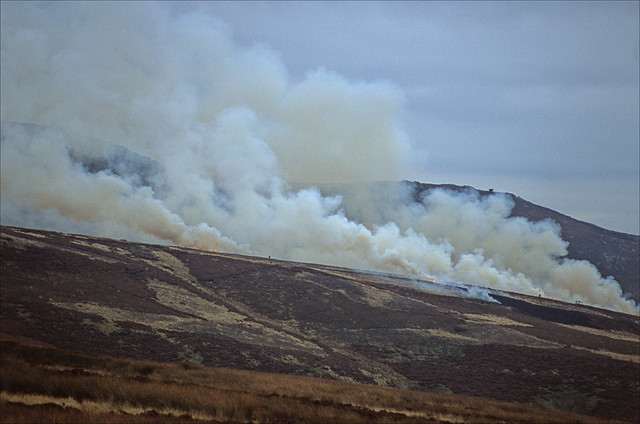
This recent picture taken of Blacka Moor illustrates the level of collusion between the shooters and the wildlife trusts.

All you have to do is compare what you see here with the the background views on the heather trust's blog in the sidebars. Each organisation supports the idea of totally artificial and boring man-created landscapes. One side of the industry does it by burning. The other by flailing. My grandad's vegetable plot was more natural.


Suspension

End of February, start of March. Waiting for things to happen. Blackbird's been singing half heartedly for a week. Chaffinches more enthusiastically. A few mistles. Great tit's changed his tune. An occasional robin.

Blight

The reality of management, not seen on the website.


Keep only the cute pictures for the shop window:
http://www.wildsheffield.com/


Wild Bee Decline

Following on from the previous post it may not be exactly the same to spray with insecticides as to spray with herbicides but both are about top down control of the natural world to benefit those who manage for profit. They will always have a story to tell explaining why its in the interest of the whole of humanity. Some in the conservation industry will even claim outrageously that they have biodiversity reasons for favouring some species against others. Is it really acceptable for a wildlife trust to spray because the regulator says there are no known problems? How many years go by before someone discovers this is not quite true?

In today's article from The Guardian it's worth reading the comments below. What happened to all those insects that used to stick to your car windscreen?